Bathroom and laundry flooring: which floors can go in?
Vinyl planks are a practical option for laundries. For bathrooms, we can help you choose a vinyl plank product approved by the manufacturer for bathroom use.
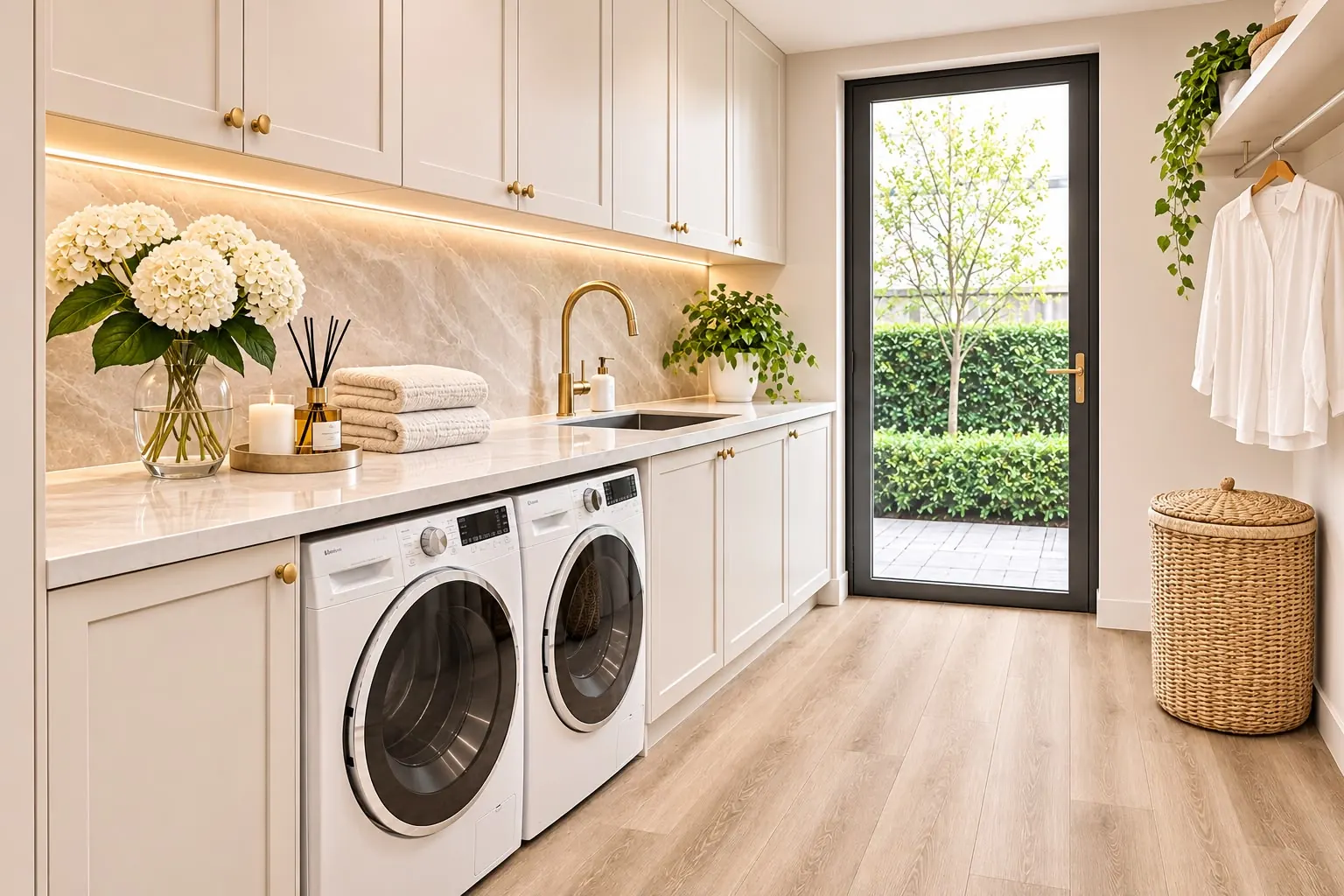
Bathroom and laundry flooring has to cope with water without being harmed by it. Vinyl planks are a practical option for laundries. For bathrooms, we can help you choose a vinyl plank product approved by the manufacturer for bathroom use. Laminate and floating timber should stay out of these rooms because their cores can swell if water reaches the joins. Carpet does not belong in a bathroom or laundry at all.
Here is how each option behaves, and what to check before you choose.
Why wet areas are different
A kitchen gets the odd spill. A bathroom gets water on the floor every day, plus steam. A laundry is where a washing machine hose lets go or a trough overflows, sometimes while nobody is home.
A waterproof board is a good start, but you also need to think about the water that gets past it. Every floor with joins lets some water through to the sub-floor if enough of it sits there for long enough.
One more thing: a floor covering is not a waterproofing membrane. Bathrooms and laundries still need the waterproofing that the building rules call for under the floor covering. That is a job for the builder or waterproofer, not the flooring installer.
Vinyl planks
Vinyl planks and tiles (often called LVT, for luxury vinyl tile) are made entirely of vinyl, so the boards themselves are not harmed by water. They can be glued down, which suits wet areas well, or clicked together as a floating floor.
Vinyl planks are a practical option for laundries. For bathrooms, we can help you choose a vinyl plank product approved by the manufacturer for bathroom use, and lay it the way the maker specifies.
Best for: laundries, and bathrooms with a plank approved for bathroom use.
Floors for wet areas, at a glance
| Floor | Bathroom | Laundry | Why |
|---|---|---|---|
| Vinyl planks | Approved products only | Yes | Not harmed by water; check the maker's approval for bathrooms |
| Laminate | No | No | Wood fibre core swells |
| Floating timber | No | No | Real timber moves and stains with water |
| Carpet | No | No | Holds moisture, grows mould |
Practical details people forget
Toilets and vanities. In a bathroom, the toilet may need to come off and go back on so the floor runs underneath. That is a job for a licensed plumber. Vanities and cabinets are usually left in place, with the floor cut neatly around them.
Washing machines. If the machine sits on the new floor, a safe tray or leak detector is a cheap backup. Check hoses every so often, as a burst hose is the most common cause of laundry floods.
Floor heights. New flooring can change the height at the door. Make sure the door still swings freely and the step between rooms is not a trip hazard.
Older homes. Many brick veneer houses in the north east have timber floors on stumps, and the laundry floor has often had decades of small leaks. Check for soft spots before anything new goes down.
Bring a photo of the room
Wet area jobs vary a lot. A photo of the floor, the toilet and the doorway helps us tell you quickly what will work. Have a look at our vinyl plank ranges, bring the photo into the showroom at 19 Sherbourne Road, Greensborough, or call (03) 9434 7677.