Carpet on stairs, or hard flooring: what works
Stairs take more wear than any other part of the house. What to look for in stair carpet and hard flooring, and how each is fitted.
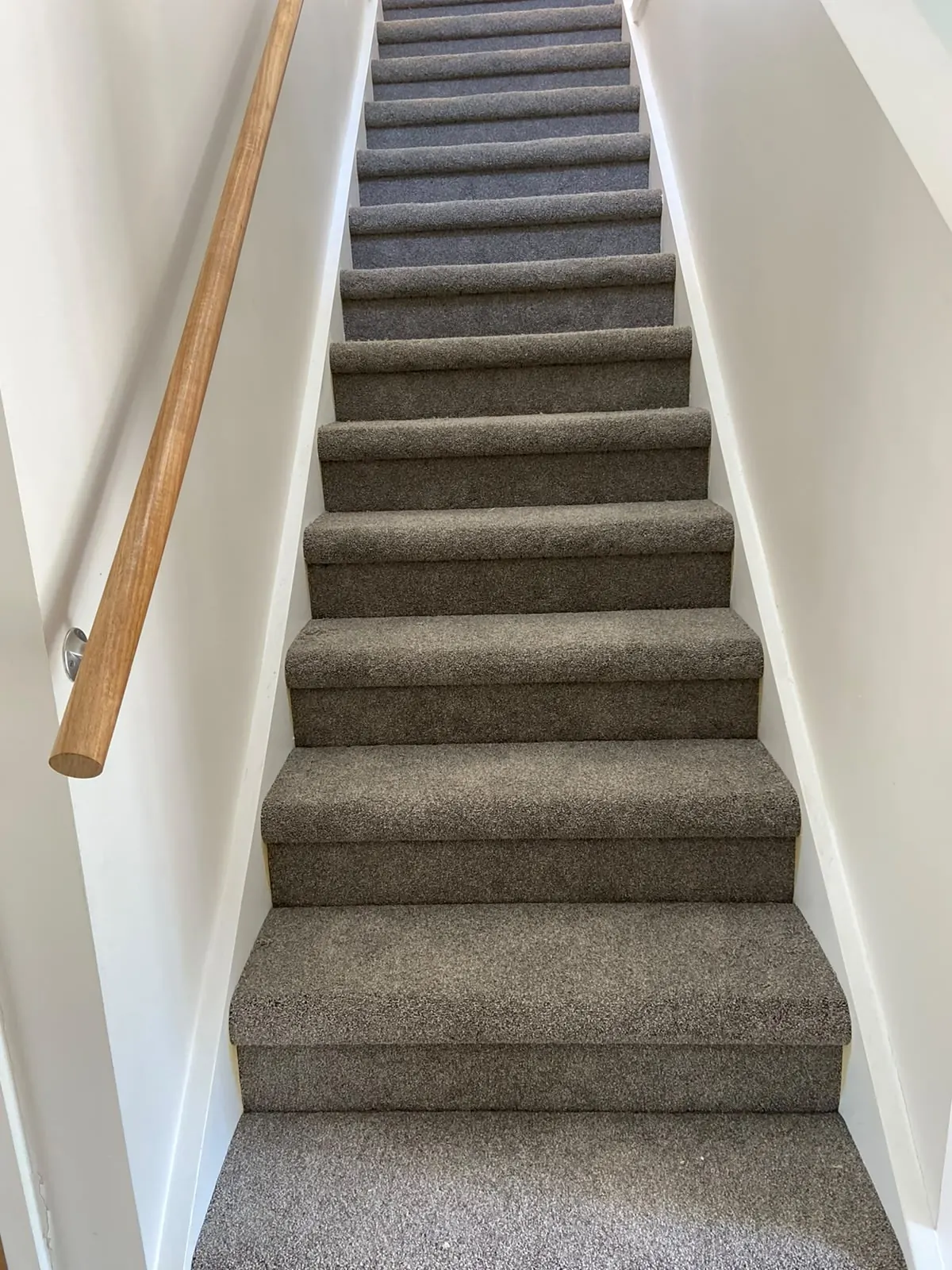
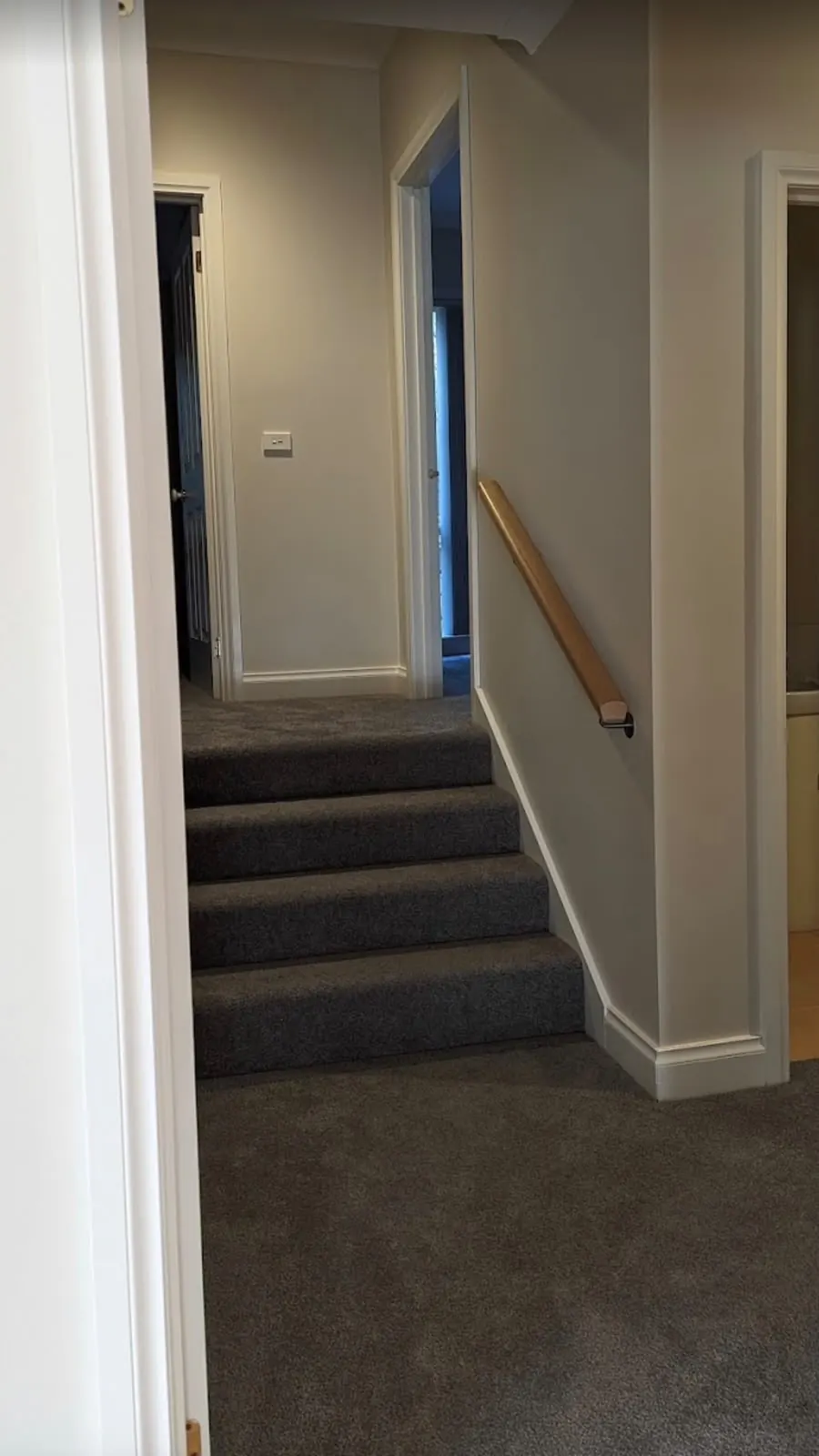
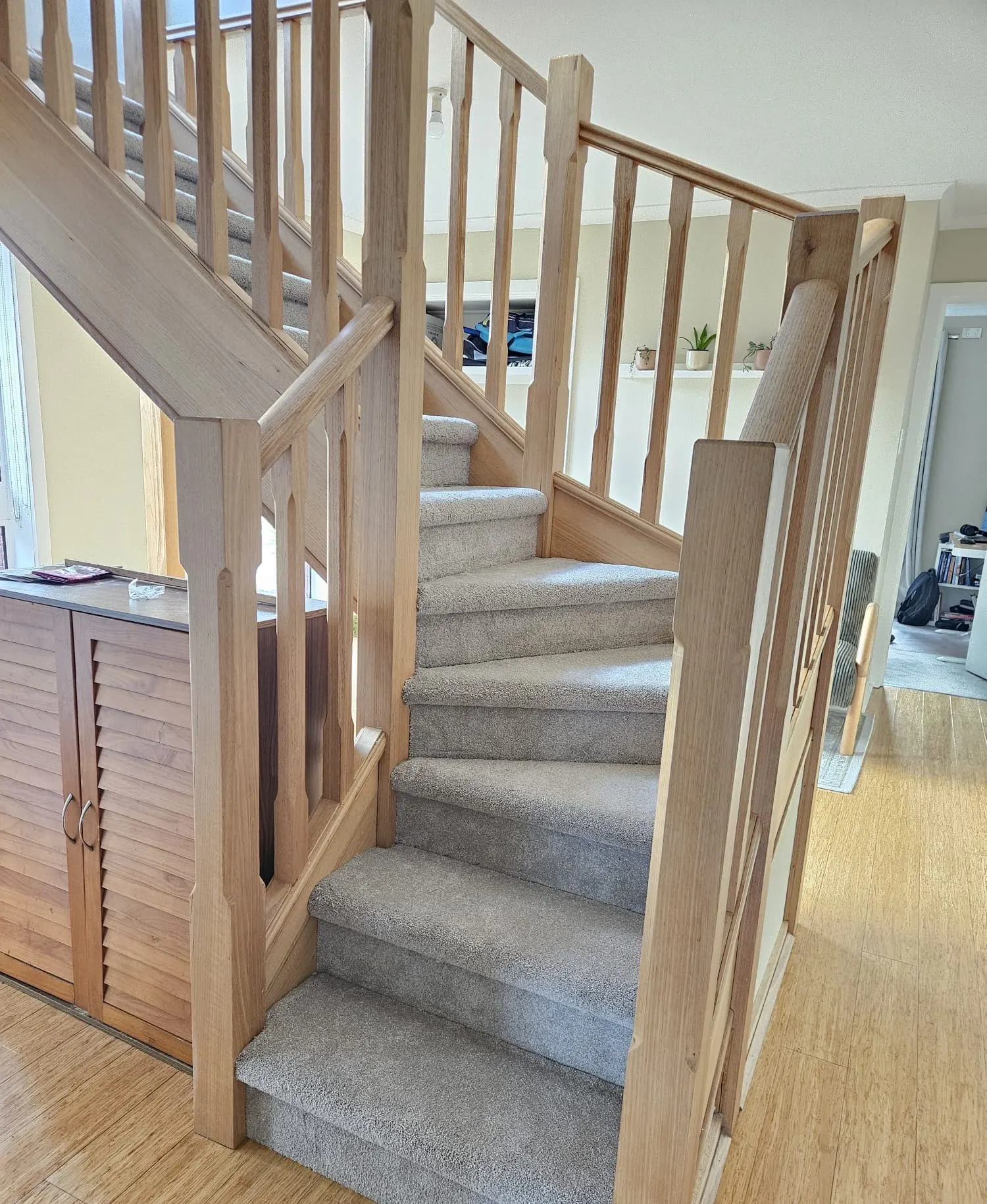
Carpet on stairs, like any floor there, takes more wear than any other spot in the house, so it needs to be rated for it. For carpet, choose a dense cut pile in nylon or solution-dyed nylon, rated at least heavy duty and marked suitable for stairs, over a firm underlay. Laminate and timber can also go on stairs, but they are glued to each step and finished with a stair nosing rather than floated.
Below is how to choose, and what the fitting involves.
Why stairs are hard on floors
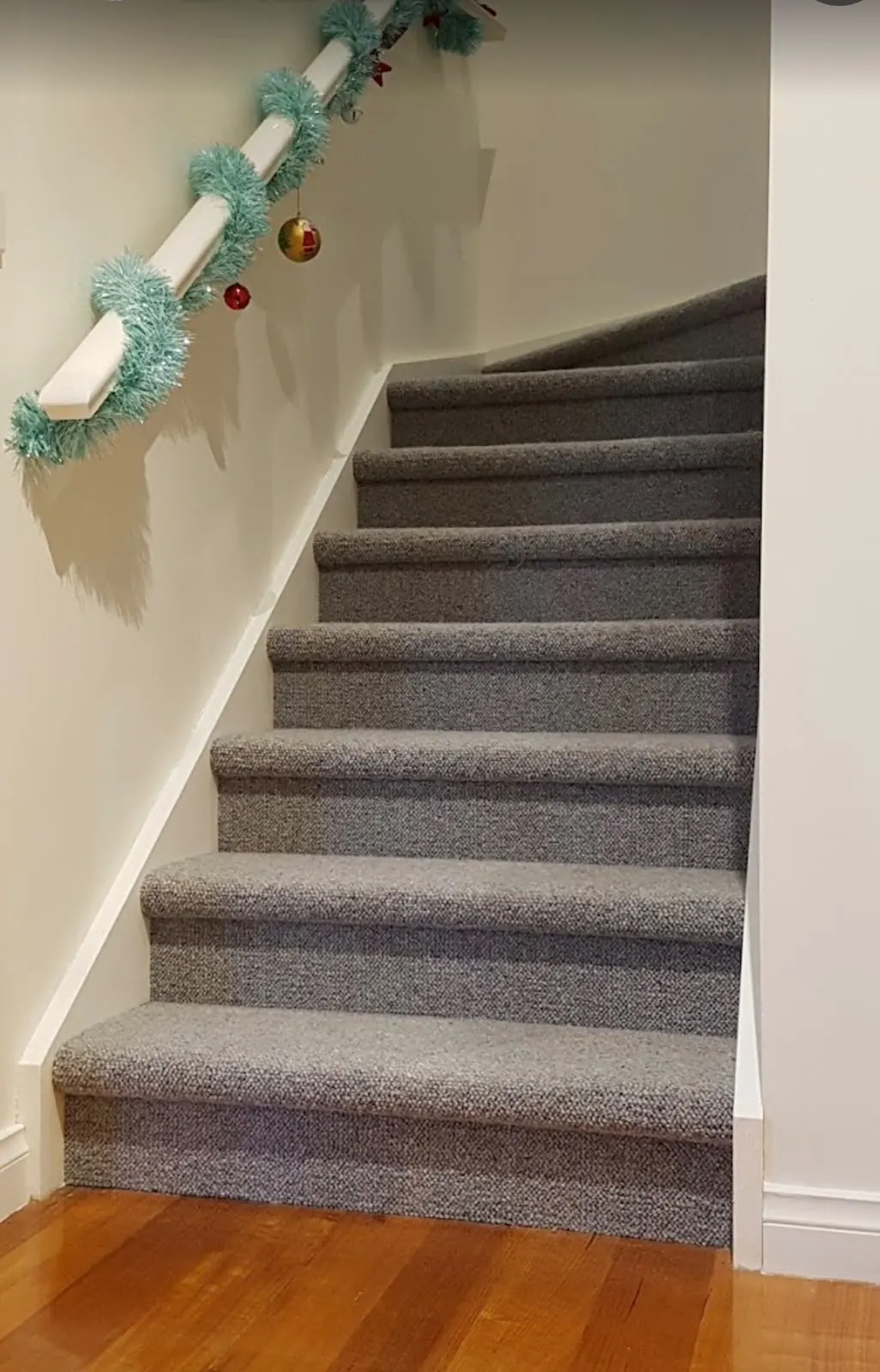
Every step takes the full weight of a person landing on the same small area, usually the front edge. That edge, called the nosing, wears faster than anywhere else in the house. Stairs also get the scuff of toes on the riser and the twist of feet turning on the landing.
A carpet or hard floor that looks fine after ten years in a bedroom can look worn on the stairs in a few.
Carpet on stairs
Check the label
Most carpets carry an ACCS label on the back of the sample. For stairs, the rating needs to be at least heavy duty, and the label should say the carpet is suitable for stairs. If it does not, choose another carpet for the stairs even if it matches the rest of the house. Our guide to the ACCS rating explains how to read the label.
Pick the right pile
- Cut twist pile is the safe choice. It is hard wearing and keeps its look on the nosing.
- Loop pile wears well but can catch heels and claws, and the loops can open up ("grin") as the carpet bends over the nosing, showing the backing.
- Plush shows every footprint and can crush on the nosing.
Dense carpet with tightly packed fibres holds up best. If you can see the backing easily when you bend the sample back over your fingers, it will show on the stairs too.
Fibre
Nylon and solution-dyed nylon (SDN) are the most resilient fibres, so they bounce back on the nosing. Wool also works well on stairs and is a classic choice. Polypropylene tends to crush on the edges and is not the best pick for a busy staircase.
Underlay
Stair underlay should be firm. A very thick, soft underlay can make each step feel spongy and lets the carpet move over the nosing, which speeds up wear. Ask for an underlay suited to stairs.
How it is fitted
Carpet on stairs is fitted step by step. The installer cuts, stretches and tucks it around each tread and riser. Straight stairs are the simplest. Stairs with a bullnose (rounded) bottom step, winders that turn a corner, or open sides take more time and more carpet. That is why stairs are priced separately in most quotes, as we explain in what goes into a flooring quote.
Laminate and other hard floors on stairs
Floating floors cannot float on stairs. Instead, the boards are cut to size and glued to each tread (the part you stand on) and each riser (the upright part). A stair nosing is then fitted to the front edge of every step, both to protect the edge of the board and to give a clean finish.
Things to know:
- Ask for matching nosings. Most laminate ranges have stair nosings made in the same colours. If the range does not, the stairs may not match the rest of the floor.
- Square-edged steps are easiest. Rounded bullnose steps need special treatment and more work.
- Expect more time per step. Each one is measured and cut by hand, so stairs add noticeably to the time and cost of a hard floor job.
- Mind the grip. Smooth surfaces on stairs can be slippery in socks. Nosings with a grooved or textured edge help, and a contrasting edge makes each step easier to see, which matters for older eyes.
Timber on stairs
Real timber stair treads can look beautiful and can be sanded and recoated later. Engineered or floating timber boards are glued to each step with nosings, and they will show wear on the edges over time, the same as any timber floor. Timber is also slippery in socks, so the same advice about grip applies.
Mixing floors
A common mix in two storey homes is hard flooring downstairs and carpet on the stairs and upstairs. The carpet on the stairs is quieter, it is softer if someone slips, and it carries on into the bedrooms. Others prefer hard floor all the way up for a clean look. Either can work. Think about who uses the stairs, whether there are small children or older relatives, and how much noise travels through the house.
Safety basics
- Make sure the carpet is tight with no loose edges at the nosing.
- Nosings on hard floors should be firmly fixed with no lip that could catch a toe.
- Keep a contrasting colour or texture on the front edge if anyone in the house has poor eyesight.
- Good lighting on the stairs does more for safety than any flooring choice.
Bring a photo of your staircase
Stairs vary a lot from house to house. A photo of the full staircase (including the bottom step and any landing) tells us straight away how the job will go. Visit the showroom at 19 Sherbourne Road, Greensborough to see stair-rated carpet and laminate nosings, or call (03) 9434 7677.