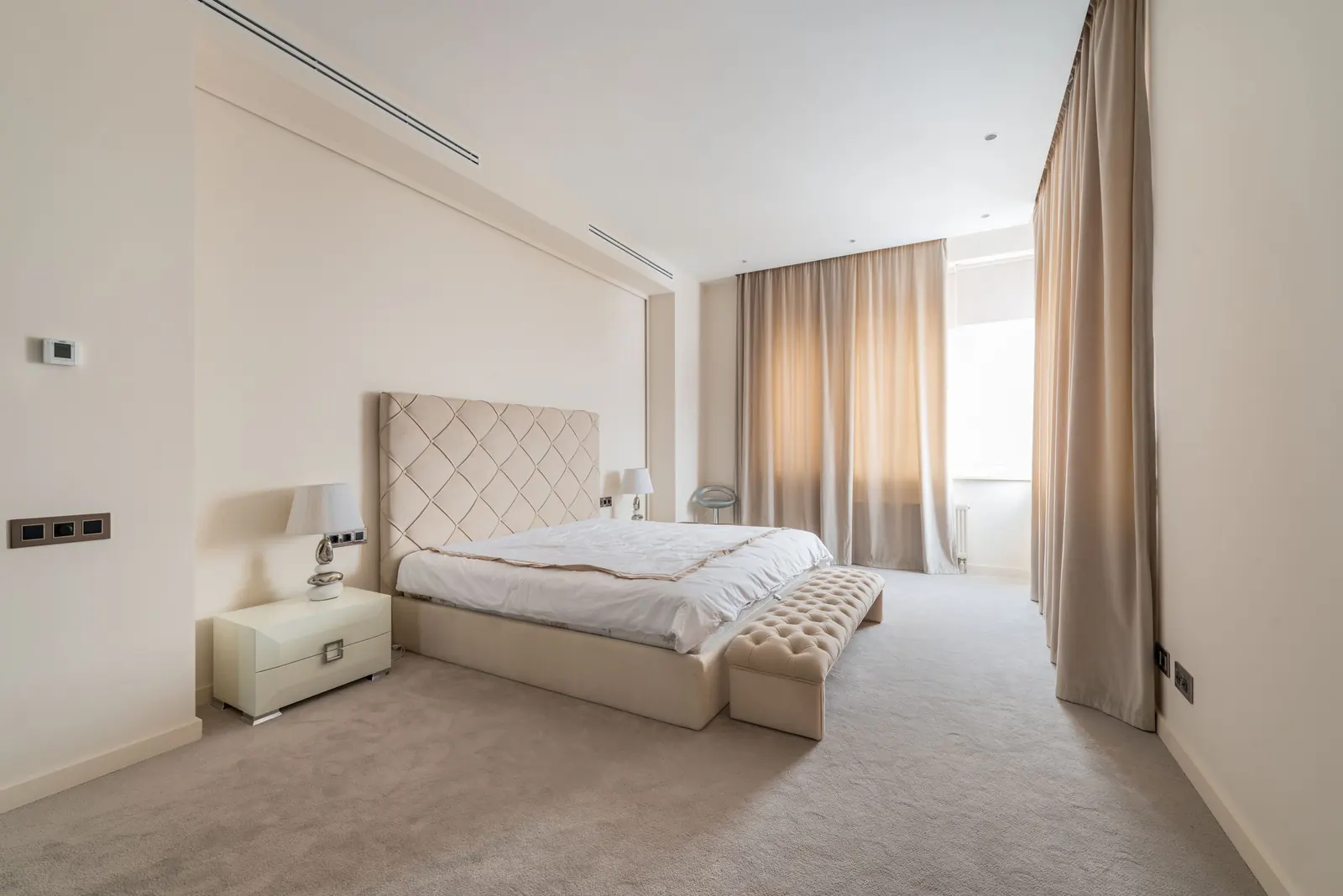
Hybrid or laminate: which suits your home?
Hybrid has a waterproof core and suits kitchens and laundries. Laminate costs less and feels firmer. Here is how to pick between them.
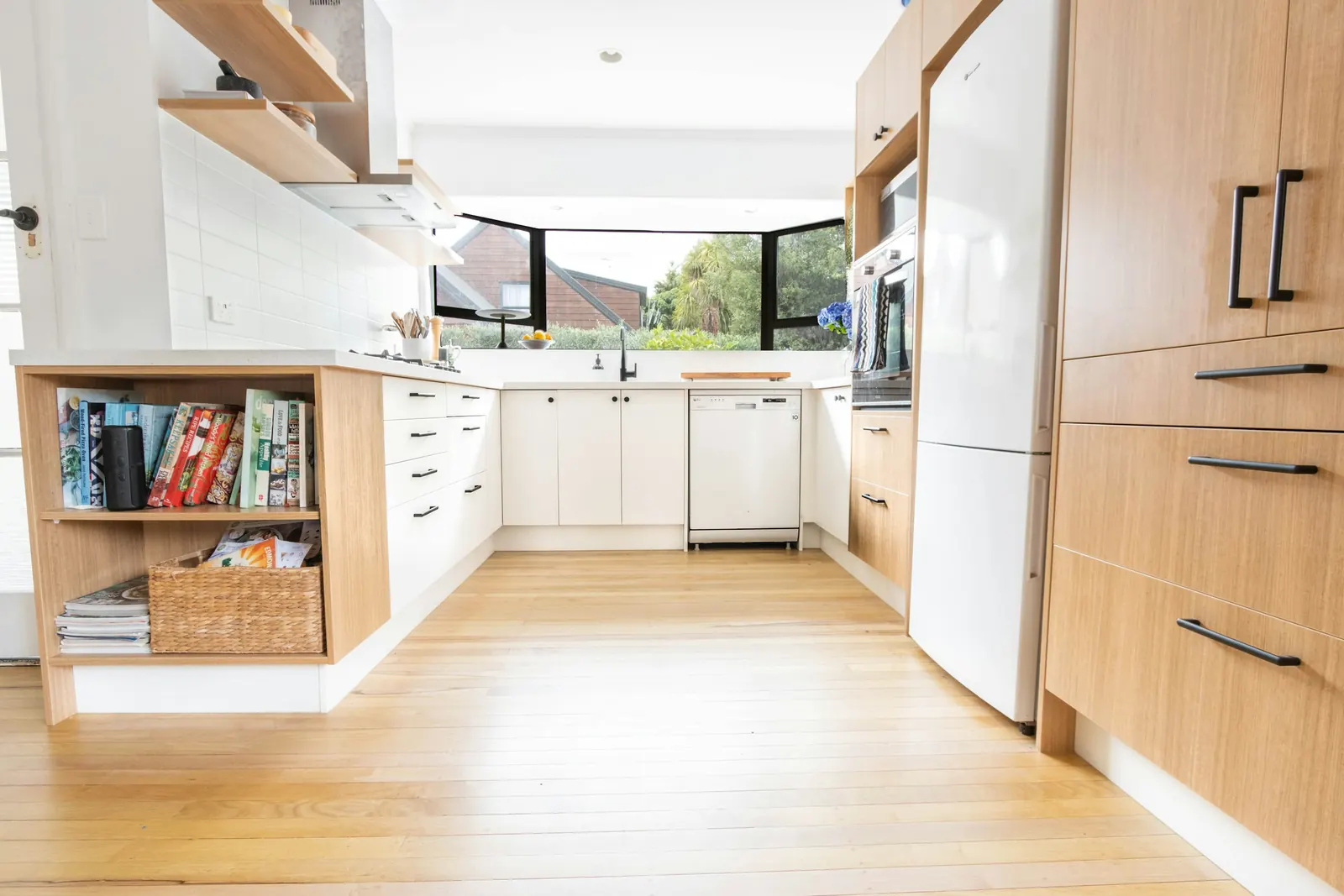
Hybrid and laminate look much the same once they are down, but they are built differently. Hybrid has a plastic and mineral core that does not swell with water, so it suits kitchens, laundries and busy family homes. Laminate has a compressed wood fibre core, costs a little less, and is a good fit for dry rooms like bedrooms, hallways and living areas.
The rest of this guide explains what that difference means day to day, and where each one earns its keep.
How each one is made
Both are floating floors. The boards click together and sit on top of the sub-floor without being glued or nailed down. Both have a printed image of timber (or stone) under a clear protective layer. The difference is underneath.
Laminate is built on high density fibreboard, usually called HDF. That is wood fibre pressed hard with resin. On top sits a decor paper with the timber print, then a tough melamine wear layer. There is a backing layer underneath to keep the board stable.
Hybrid swaps the wood fibre core for a rigid core made mostly of limestone powder and PVC (often sold as SPC, for stone plastic composite). On top is a printed film and a vinyl wear layer. Many hybrid boards come with an acoustic underlay already attached to the back.
That core is the whole story. Wood fibre takes on water. A stone and plastic core does not.
Water: the main difference
If a dishwasher leaks or a dog knocks a water bowl over, hybrid boards will not swell. You dry the floor and carry on.
Laminate is a different matter. A spill wiped up within a few minutes is usually fine, because the surface itself is sealed. The weak point is the joins. If water gets into the edge of a laminate board, the HDF swells and the edges lift. That damage does not go back down. Some newer laminates are sold as water resistant, with treated edges, but read the fine print: the warranty usually covers spills for a set number of hours, not standing water.
One thing worth knowing about hybrid: the boards are waterproof, but water can still run through the joins and around the edges to whatever is underneath. On a concrete slab that rarely matters. On a timber floor over stumps, a big leak can still reach the sub-floor. So "waterproof" means the board survives, not that the room is sealed.
Feel, sound and comfort
Laminate feels firm and a little closer to real timber underfoot. Without a decent underlay it can sound clicky when you walk on it in hard shoes.
Hybrid has a slightly softer feel because of the vinyl top and the attached underlay. Many people find it quieter, which matters in a double storey home or a unit where the neighbours are below you.
Neither is warm the way carpet is. In a Melbourne winter, rugs and slippers still have a job to do.
Scratches and dents
Laminate's melamine top is very hard, and good laminate resists scratching well. Laminate is graded with an AC rating (AC1 to AC5) that tells you how much wear it is built for. AC3 or above suits any room in a house. AC4 suits light commercial use.
Hybrid's surface is vinyl, which is softer. How well it stands up to claws and chair legs depends on the thickness of the wear layer, which is usually quoted in millimetres. A thicker wear layer lasts longer. If you have large dogs, ask about the wear layer before you look at colours.
Both floors can dent under very heavy point loads, like a piano on small feet. Wide furniture pads help.
Sun and heat
North and west facing rooms in Melbourne get hot afternoon sun through summer. All floating floors move a little with temperature, which is why the installer leaves an expansion gap around the edges.
Cheaper hybrids can move more in direct sun than you would expect, and some colours can fade. The Sun-Plank hybrid we sell is made to be sun and fade resistant, which is one reason we use it in rooms with big windows. Whichever floor you choose, blinds or curtains on hot afternoons will help it last.
Where each one goes
| Room | Hybrid | Laminate |
|---|---|---|
| Kitchen | Good fit | OK if spills are wiped up quickly |
| Laundry | Good fit | Not recommended |
| Bathroom | Possible, outside the shower (check the warranty) | Not recommended |
| Living and dining | Good fit | Good fit |
| Bedrooms and hallways | Good fit | Good fit |
| Over old ceramic tiles | Usually yes | Usually yes, if the tiles are flat |
If you want one floor running through the whole house, including the kitchen and laundry, hybrid makes that simple. If the hard floor is only going into dry rooms, laminate can do the job for less. There is more detail on wet areas in our guide to which floors can go in a bathroom or laundry.
Cost
Laminate is usually the cheaper of the two, both for the boards and sometimes for the laying. Hybrid costs more because of the core. The gap varies a lot between ranges, and a good laminate can cost more than a basic hybrid.
Sub-floor work, removing old flooring, stairs and trims all add to the total no matter which floor you pick. We cover what goes into a price in what a flooring quote should include.
Questions to ask in the showroom
- How thick is the wear layer (for hybrid), or what is the AC rating (for laminate)?
- Is underlay attached, or is it a separate cost?
- What does the warranty say about water, sun and pets?
- Can it go over my current floor, or does that need to come up?
See them side by side
The easiest way to decide is to stand on both. Our showroom at 19 Sherbourne Road, Greensborough has hybrid and laminate boards you can take home and lay on your own floor in your own light. Have a look at our hybrid flooring and laminate flooring ranges, or call (03) 9434 7677 and talk it through with Steve or Kay.