How to choose carpet tiles for an office or school
Carpet tiles suit offices and schools because worn or stained tiles can be swapped out. What to check: rating, fibre, backing, layout and spares.
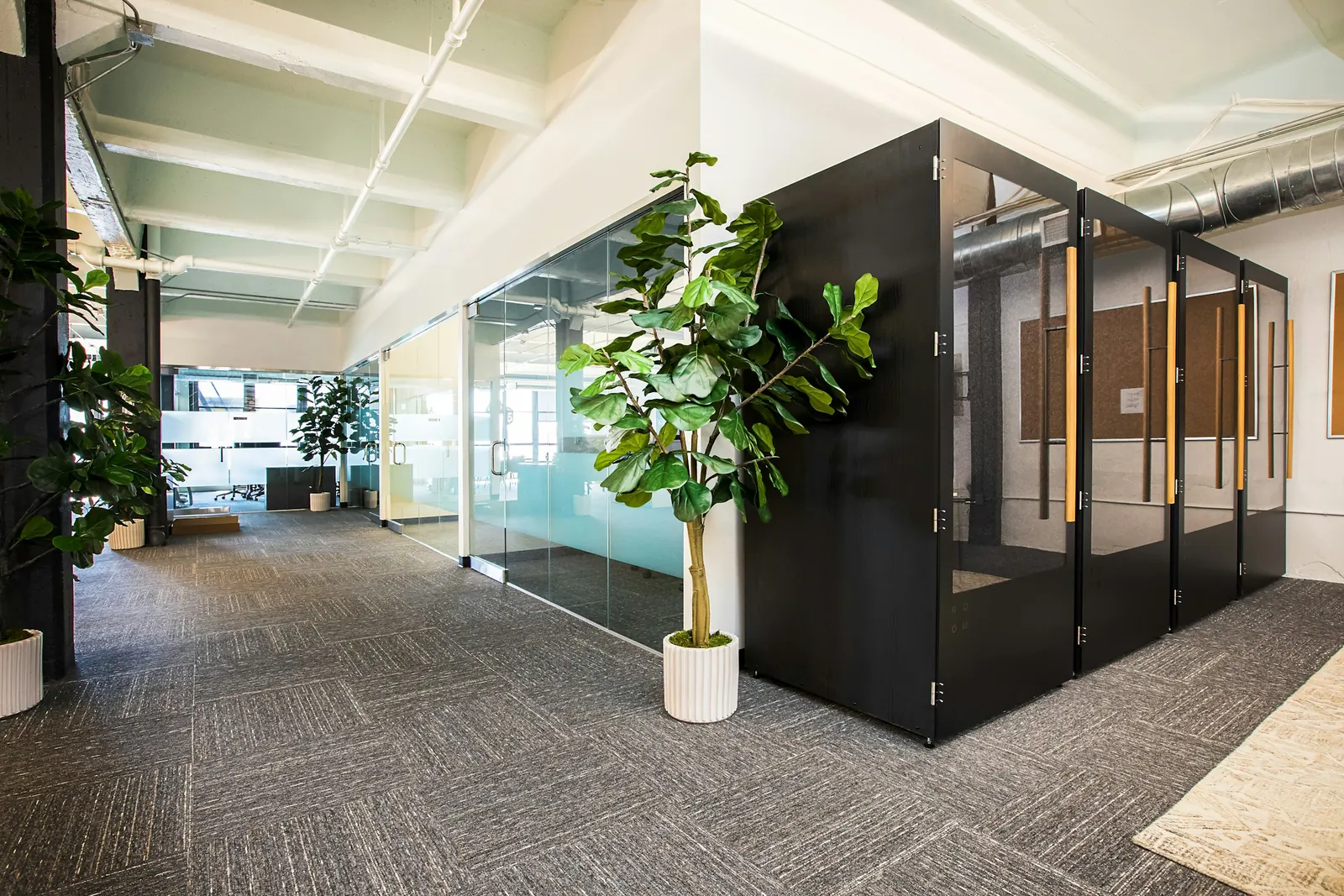
For offices and schools, carpet tiles are popular because a worn or stained tile can be lifted and replaced without redoing the whole floor. When choosing them, check the contract wear rating on the ACCS label, the fibre and pile, the backing, the fire and acoustic performance the building needs, and how the tiles will be laid. Always order spares from the same batch.
Here is what each of those means in practice.
Why tiles suit commercial spaces
Commercial carpet tiles are usually 50 cm by 50 cm squares (planks and other sizes are also made). Their main advantages:
- Replace one, not the room. A coffee spill under a desk or a worn path at the door can be fixed by swapping a few tiles.
- Work around the building. Tiles fit around floor boxes, columns and cable outlets, and access floors can be lifted tile by tile.
- Less disruption. Tiles can be laid in sections, so one part of an office or one classroom can be done at a time.
- Easier to get in. Boxes of tiles fit in lifts and up stairs where large rolls of carpet will not.
The wear rating
Most carpet tiles sold in Australia carry an ACCS label. Commercial carpets are graded on a contract scale that runs to four stars, based on how heavy the foot traffic is. A tile that suits a quiet private office may not hold up in a school corridor or a busy reception.
Match the rating to the busiest area, not the average. Corridors, entries, lift lobbies and the area around kitchens and breakout spaces take far more traffic than desks in a quiet corner. Some fit-outs use a higher rated tile in the corridors and a different one at the desks. Our guide to the ACCS rating explains the label in more detail.
Fibre and pile
Nylon and solution-dyed nylon are the most common fibres in commercial tiles. Solution-dyed nylon has the colour through the whole fibre, so it resists stains and fading, and can usually handle stronger cleaning methods. That matters in schools, healthcare and food areas.
Loop pile is the usual choice for commercial tiles. A low, dense loop wears well, rolls easily under chairs and trolleys, and does not show traffic lanes as quickly as a cut pile. Patterned and multi-tone tiles hide marks between cleans.
For more on fibre types, see carpet fibres explained.
Backing
The backing holds the tile flat and stable. Common types are a firm hardback (often bitumen or a similar compound) and cushion backs that add comfort and some sound absorption. Ask what the backing is made of, whether it has recycled content, and whether it suits your sub-floor. Cushion backed tiles can suit areas where people stand for long periods.
Chairs on castors
Office chairs on castor wheels are tough on any carpet. The ACCS treats castor chair use as severe, and carpet under castor chairs may not perform to its rating without protection. Warranties usually exclude castor damage. Use chair mats at desks, or check whether the tile has been tested for castor use.
Fire, acoustics and building requirements
Commercial floor coverings have to meet the fire performance requirements of the National Construction Code for the type of building and where the floor is. Ask the supplier for the test reports for the tile you are considering, and check with your builder, fit-out manager or certifier about what your building needs.
Acoustic performance also matters in open plan offices and classrooms, where carpet helps reduce noise. If your project has a sustainability rating target, ask for the product's environmental certificates too.
Layout and installation
Tiles can be laid in different patterns:
- Monolithic: all tiles facing the same way, for a look close to broadloom carpet.
- Quarter turn: each tile turned 90 degrees from the one next to it, for a chequered texture.
- Ashlar or brick: rows offset by half a tile.
Tiles are usually held in place with a release adhesive (sometimes called a tackifier), which keeps them from moving but lets them be lifted later. The sub-floor needs to be clean, flat and dry, and old adhesive or uneven patches in a concrete slab should be fixed first.
Entries and wet areas
The first few metres inside an entry take most of the dirt and water from outside. An entry matting system at the door stops much of it reaching the carpet tiles and makes the rest of the floor last longer.
For wet areas, kitchens and healthcare spaces, commercial vinyl is usually a better fit than carpet. We supply Airlay commercial LVT for healthcare, education, retail and office projects. Have a look at our commercial flooring page for more.
Spares and colour matching
Tiles from different production batches can vary slightly in colour. Order spares from the same batch as the main order and store them flat, in their boxes, somewhere dry. When a tile needs replacing, the spares will match.
Cleaning
- Vacuum high traffic areas daily or as often as the site allows.
- Deal with spills quickly, blotting rather than rubbing.
- Plan regular deep cleaning with a commercial cleaner who knows the product.
Most commercial warranties require a documented cleaning program, so keep records.
Talk to us about your site
Commercial jobs often need work out of hours, in stages, or around a school term. Tell us about the building and the timing and we will work through tile options with you. See our carpet tiles range, call (03) 9434 7677, or arrange a site visit through our quote page.